-
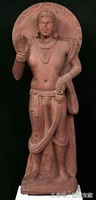 犍陀羅佛立像之五
 人物身材高大,比例勻稱,骨架分明,肌肉健碩,衣褶流暢厚重,展現了西方人體雕塑的影響,同時保留了東方宗教藝術的精神性。犍陀羅佛像一般身穿希臘式的披袍,衣褶豐富,多由左肩下垂﹐袒露右肩。
-
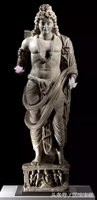 犍陀羅佛立像之四
 犍陀羅佛像一般身穿希臘式的披袍,衣褶豐富,多由左肩下垂﹐袒露右肩。人物身材高大,比例勻稱,骨架分明,肌肉健碩。
-
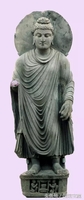 犍陀羅佛立像之三
 面部表情沉靜肅穆,有明顯的歐洲人特徵:高鼻、大眼、薄唇,頤部豐滿犍陀羅佛像一般身穿希臘式的披袍,衣褶豐富,多由左肩下垂﹐袒露右肩。人物身材高大,比例勻稱,骨架分明,肌肉健碩。
,額際寬闊,頭髮自然捲曲,通常有寬大而鮮明的頂髻。
-
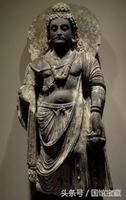 犍陀羅佛立像之二
 犍陀羅佛像一般身穿希臘式的披袍,衣褶豐富,多由左肩下垂﹐袒露右肩。人物身材高大,比例勻稱,骨架分明,肌肉健碩。
-
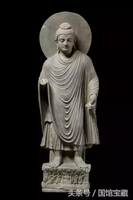 犍陀羅佛立像之一
 犍陀羅佛像一般身穿希臘式的披袍,多由左肩下垂﹐袒露右肩。人物身材高大,比例勻稱,骨架分明,肌肉健碩,衣褶流暢厚重,展現了西方人體雕塑的影響,同時保留了東方宗教藝術的精神性,這種藝術風格反映了多元文化的交流與融合。
-
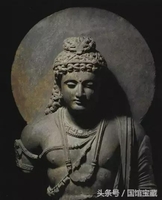 犍陀羅佛像之五
 信徒的形像皆用當地流行的希臘風格表現﹐僅佛頭部雕有光輪以顯示其神聖。
-
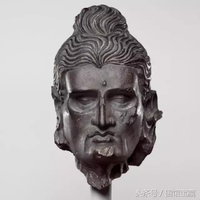 犍陀羅佛像之四
 面部表情沉靜肅穆,有明顯的歐洲人特徵:高鼻、大眼、薄唇,頤部豐滿,額際寬闊,頭髮自然捲曲,通常有寬大而鮮明的頂髻。
-
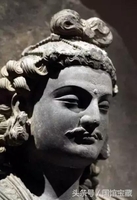 犍陀羅佛像之三
 面部表情沉靜肅穆,有明顯的歐洲人特徵:高鼻、大眼、薄唇,頤部豐滿,額際寬闊,頭髮自然捲曲,通常有寬大而鮮明的頂髻。
-
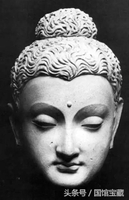 犍陀羅佛像之二
 在馬其頓統治時期,東西方雕塑藝術互相激盪和碰撞,最後融合在了犍陀羅地區,佛教及印度文化作為母體,希臘及地中海文化則是推動的力量,最終形成了犍陀羅風格。
-
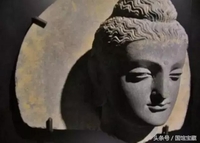 犍陀羅佛像之一
 犍陀羅佛像藝術是佛陀造像的源頭。
貴霜王朝時代是犍陀羅藝術的鼎盛時期,犍陀羅地區曾為希臘文化殖民地,仿照希臘羅馬雕刻神像的手法,以西方人體寫實形式雕刻佛像,結合了佛教文化和希臘文化,此造像風格後人以地名「犍陀羅」稱之。
-
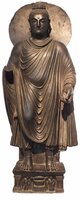 Buddha
 A life size stone image of Guddha is standing in adhayamudra. In his left hand he holds the tem of his garments. The present scuplture is typically Gandhara in style- marked by long flowing drapery placed loosely on the body with heavey schematic folds. The robes cover both the shoulders. He bears an urna mark on the forehead. The wavy hair is arranged in top-knot fashion.
-
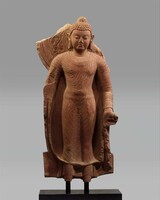 Standing Buddha Offering Protection
 This Buddha image embodies the qualities of radiant inner calm and stillness, the products of supreme wisdom. The figure once raised his right hand (now missing) in the characteristic abhaya-mudra, a gesture dispelling fear and imparting reassurance. The Buddha is robed in the simple, uncut cloth of a monk, and his religiosity is further conveyed by a large halo and auspicious markings (lakshanas), both natural and supernatural, denoting Buddhahood (the state of perfect enlightenment), As the summation of stylistic development in a period of Buddhist expansion, this representation became the benchmark for the Buddha image throughout Asia.
-
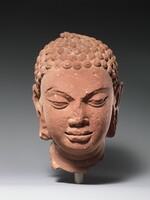 Head of a Buddha
 This head from a nearly lifesize figure of the Buddha reflects the late Gupta artistic idiom. In an effort to represent the Buddha’s enlightenment and his inward-looking meditative nature, the artist abstracted and idealized his physical features, especially evident in the articulation of the eyes and the intersecting convex planes of his cheeks and forehead.
-
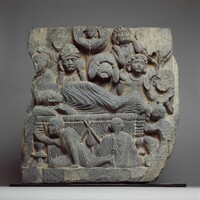 The Death of the Buddha (Parinirvana)
 According to the Buddhist chronicles, when the Buddha died near the city of Kushinagara, in northern India, he broke free from the cycle of rebirths and attained nirvana, absolute release from karmic rebirth. This panel, which would have been displayed in the harmika enclosure at the summit of a stupa (relic mound), shows the Buddha surrounded by lay and monastic mourners expressing their grief. These reactions are contrasted with the calm of the monk Subhadra, seated facing the Buddha’s corpse, who alone comprehends the true meaning of the Buddha’s death. Images of the Buddha’s paranirvana based on this Gandharan prototype became important icons for veneration across the Buddhist world in the following centuries.
-
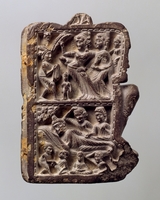 Panel of a Portable Shrine
 Such portable shrines from Gandhara have been found in Khotan, providing a rare glimpse into how style and religious iconography traveled into Central Asia. The upper register in the interior illustrates the Buddha’s miraculous birth and the lower presents the Parinirvana, his death.
-
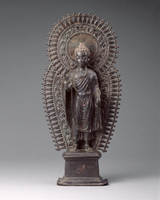 Standing Buddha with Radiate Combined Halo
 A few small personal images from Gandhara representing the Buddha have survived. This metal image blends elements seen in the stone sculpture of Gandhara with the Gupta style of north India. Its portability made it an important vehicle for disseminating the Gandharan style to other parts of Asia.
-
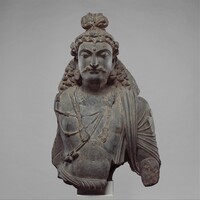 Bust of a Bodhisattva
 This image was made at a time when the naturalism of the earlier sculptural tradition was giving way to a greater formality, as artists strove to depict enlightened beings. The elaborate hairstyle, with topknot and hair flowing behind the shoulders, suggests that the sculpture represents Maitreya, the Buddha of the future. This image was once embellished with metal elements—note the iron remains of an attachment in his left ear and the holes for affixing metal decorative elements along edge of his jeweled hair ornament
-
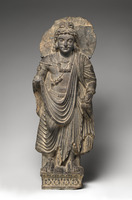 Standing Bodisattva Maitreya (Buddha of the Future)
 Maitreya is the Buddha of the next age, much as Shakyamuni is the Buddha of our age. He resides in Tushita heaven waiting for his final rebirth. As befits his highest rebirth, he wears the garments and jewels of a prince, though his halo clearly demarks his deified status. He can be identified by the sacred water flask in his left hand.
-
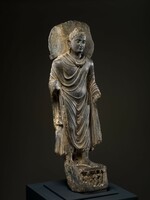 Buddha
 This refined Buddha, the finest example of this iconic image type to appear on the market in at least the last decade, is the product of one of the great workshops active in the central Gandharan region of modern day Pakistan. It is of exceptional quality and must have been done by a master sculptor as is evidenced by the figure’s beautifully carved face, dramatically cascading drapery folds, naturalistic hair and finely finished surface. The quality of the dense schist used for this sculpture is another indication that it was produced for an elite patron.
-
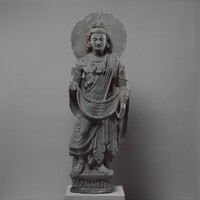 Standing Bodhisattva Maitreya (Buddha of the Future)
 This bodhisattva can be identified as Maitreya by the lip of the sacred water flask in his left hand and by his loop topknot, a hairstyle common to Maitreya images. On the base, donor figures venerate a Buddhist reliquary that rests on a low throne under a canopy.